With small and medium-sized enterprises (SMEs) contributing more than 60% of Indonesia’s Gross Domestic Product (GDP) and employing approximately 97% of the national workforce, the sector plays a strategic role in maintaining economic resilience, creating jobs, and driving economic activity across the country.
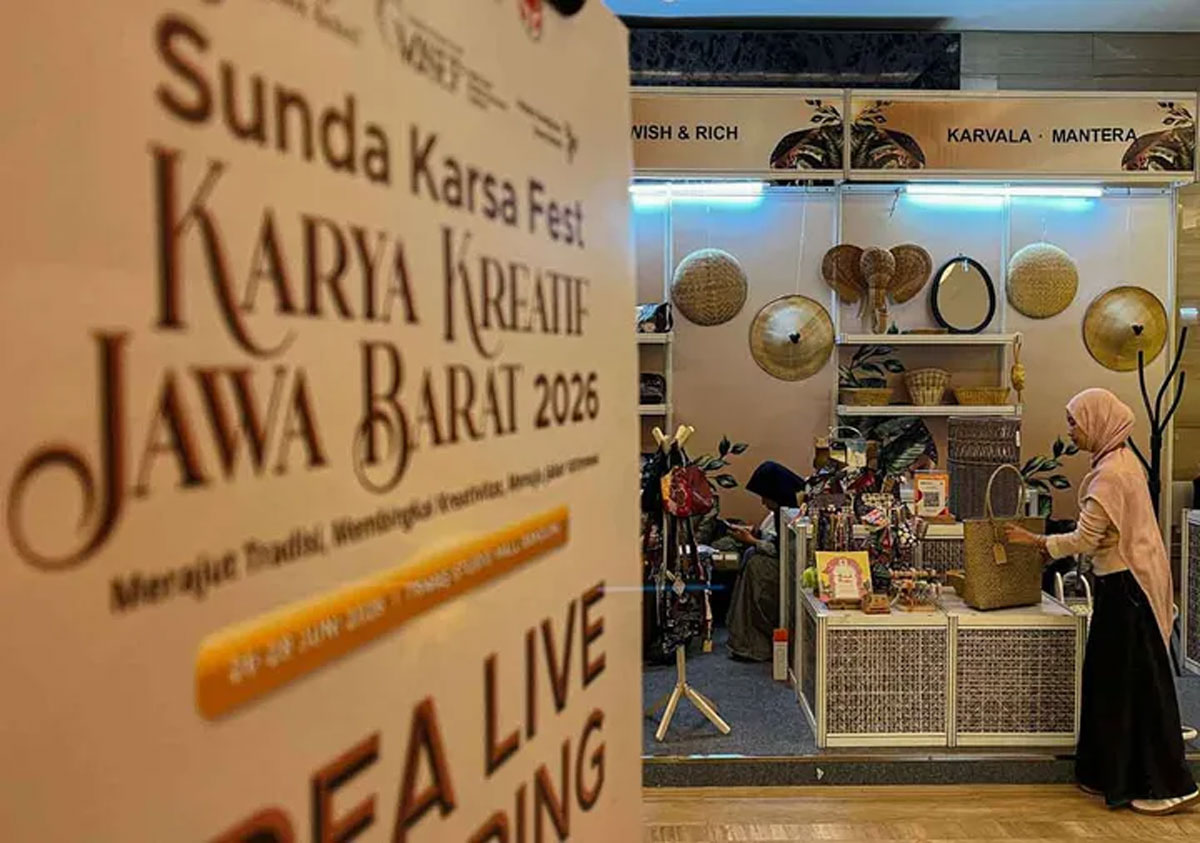
With this in mind, the Bank Indonesia (BI) Representative Office for West Java Province, in collaboration with the West Java Provincial Government, organized Sunda Karsa Fest: West Java Creative Works 2026 at the Trans Convention Centre (TCC) and Trans Studio Mall in Bandung from June 26–28, 2026.
The event was officially opened via video message by Bank Indonesia Deputy Governor Thomas Djiwandono on the evening of Friday, June 26, 2026, as he was unable to attend in person. He said that BI, together with the West Java Provincial Government and other stakeholders, continues to strengthen the SME ecosystem.
“This year, Sunda Karsa Fest once again integrates three flagship events: West Java Creative Works, the West Java Sharia Economic Festival, and West Java Craft Week. Sunda Karsa Fest 2026 carries the theme of nurturing a cultural, digital economic ecosystem and ecological balance toward an Exceptional West Java,” he said.
According to Thomas, the theme reflects the commitment of both BI and the West Java Provincial Government to continue strengthening the regional economy by building on local culture, digital transformation, and sustainable development principles.
He added that the vision is aligned with West Java’s long-term development agenda.
“Global economic conditions in 2026 continue to be marked by significant uncertainty. Therefore, Indonesia’s domestic economy—particularly the micro, small, and medium enterprise sector—remains a crucial pillar in sustaining national economic growth,” he said.
Despite global uncertainty, West Java recorded 5.79% economic growth in the first quarter of 2026, outperforming the national average of 5.71%. The growth was mainly supported by resilient domestic and government spending, as well as strong investment performance across the province.
“West Java currently has the largest investment potential and target among all provinces on Java Island, with a target exceeding Rp270 trillion,” Thomas said.
He reaffirmed BI’s commitment to supporting the investment target by utilizing its various investor networks. Bank Indonesia also remains committed to helping West Java achieve its 7.95% year-on-year economic growth target by 2029.
“The two main pillars we will continue to promote are accelerating digital economic and financial transformation, as well as strengthening SMEs. In terms of the digital economy, QRIS adoption in West Java continues to show positive and promising progress,” he said.
Thomas explained that, as of May 2026, West Java had 10,458,324 QRIS merchants, representing 24.68% year-on-year growth, with 97.19% consisting of micro, small, and medium businesses.
During the same period, QRIS transactions in West Java reached 1.87 billion transactions, with a total value of Rp163.74 trillion.
Regarding SME development, Thomas said the BI Representative Office in West Java continues to strengthen its business development and empowerment programs.
As of May 2026, BI had 181 assisted SMEs, consisting of 144 businesses in the processed food, fashion, and handicraft sectors, 30 strategic food clusters, and seven assisted tourism villages.
“Bank Indonesia consistently implements SME development programs through an integrated approach involving all relevant stakeholders, ensuring that SMEs are not only able to survive but also move up the value chain and become competitive businesses in both national and global markets,” he said.
Thomas added that SME development must also be accompanied by stronger sustainability initiatives.
“The concept of the circular economy is becoming a key factor in enhancing the competitiveness of Indonesian products in the global market,” he said.
He expressed hope that Sunda Karsa Fest would generate tangible impacts, including improving SME capacity and quality, expanding market access, fostering cross-sector collaboration, and strengthening a sustainable regional economy rooted in local culture and Sharia economic values.
Meanwhile, Junanto Herdiawan, Head of the Bank Indonesia Representative Office for West Java, said that Sunda Karsa Fest 2026 features 260 exhibition booths and tenants, showcasing a wide range of flagship products and services.
The event also includes booths offering services from Bank Indonesia, banking institutions, digital payment providers, and various public service agencies.***