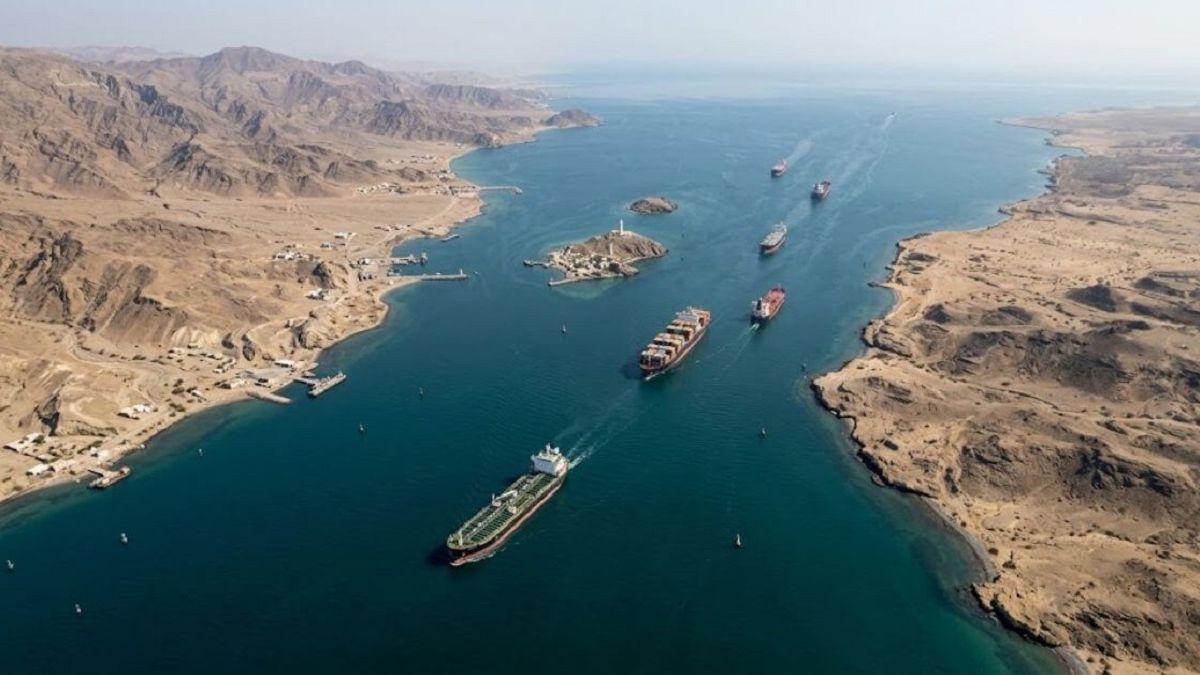
LEBAK PORTAL – Geopolitical tensions in the Middle East are heating up again after Iran made serious threats to close the Bab al-Mandeb Strait, one of the most strategic shipping lanes in the world.
This threat emerged in the midst of a conflict that had previously put the Strait of Hormuz under strict restrictions.
The strong statement was made by a senior adviser to Iran’s Supreme Leader, Ali Akbar Velayati, who emphasized that Tehran’s allies could treat Bab al-Mandeb as Iran treated Hormuz.
He warned that disruption to global energy and trade routes could happen with just “one step”.
This threat was in response to an ultimatum from United States President Donald Trump who previously warned of possible attacks on Iranian infrastructure if Tehran did not reopen full access to the Strait of Hormuz.
Where is Bab al-Mandeb Located?
The Bab al-Mandeb Strait is located between Yemen to the northeast and Djibouti and Eritrea to the southwest. This route connects the Red Sea with the Gulf of Aden, which is the entrance to the Indian Ocean.
With a width of only about 29 kilometers at its narrowest point, ship traffic in this strait is very limited and vulnerable to security threats. De facto, Yemen’s coastal areas around the strait are under the influence of the Iran-backed Houthi group.
Why is Bab al-Mandeb so vital?
Bab al-Mandeb is one of the most important maritime chokepoints in the global trade system.
Some key facts:
- About 4.1 billion barrels of crude oil and refined products will pass through in 2024.
- This pathway represents about 5% of total global oil consumption.
- About 10% of world trade, including Asian exports to Europe, passes through this route.
- If Bab al-Mandeb and the Strait of Hormuz are both closed, about 25% of supply
- Global energy will be affected.
This strait is also the main alternative route for Saudi Arabia’s oil exports through the port of Yanbu on the Red Sea, which is connected by Saudi Aramco’s 1,200 km East-West Pipeline. The pipeline’s capacity was even increased to 7 million barrels per day after restrictions in Hormuz.
Apart from energy, this route is a vital route for shipping containers from China, India and other Asian countries to Europe via the Suez Canal.