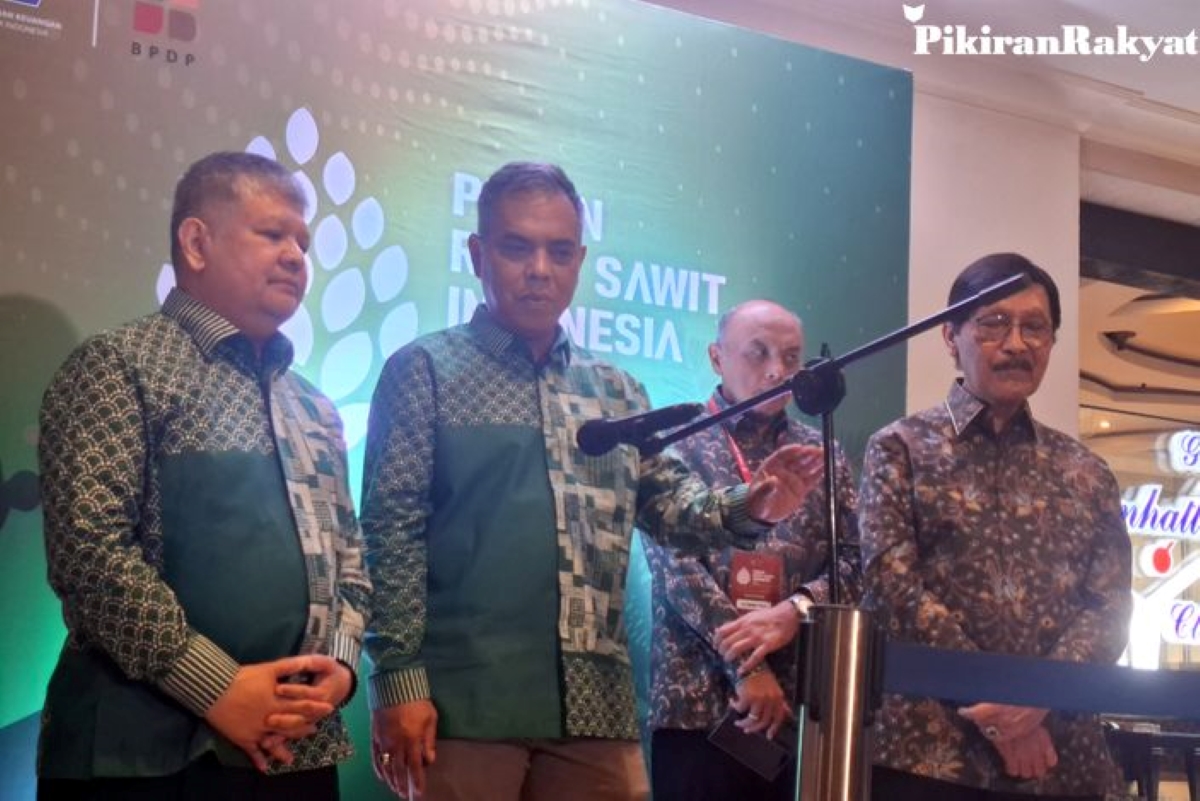
The Directorate General of Plantations under the Ministry of Agriculture and the Palm Oil Plantation Fund Management Agency (BPDP) have dismissed public concerns over the potential shortage of Crude Palm Oil (CPO) supplies for the food industry and exports due to rising demand from the B50 biodiesel program.
Acting Director General of Plantations Heru Tri Widarto stated that increasing the biodiesel blending mandate from B40 to B50 will not reduce CPO availability for other sectors, given the significant potential to improve Indonesia’s palm oil productivity—a target the government is actively pursuing.
According to Heru, the key to securing sufficient CPO supplies lies in boosting productivity across the country’s three main plantation sectors: State-Owned Plantations (PBN), Private Large-Scale Plantations (PBS), and smallholder plantations.
“Regarding concerns that there won’t be enough CPO, besides implementing the Smallholder Palm Oil Replanting (PSR) program, we can also encourage both State-Owned Plantations (PBN) and Private Large-Scale Plantations (PBS) to increase their production,” he told reporters after the 2026 Indonesian Palm Oil Research Week in Jakarta on Monday, July 20, 2026.
“A rough calculation shows that if these plantations, which cover around 9.9 million hectares, increase productivity by just half a ton per hectare, they could generate an additional 4.5 million tons of CPO,” he added.
Heru explained that the government also plans to maximize the Plantation Business Assessment (PUP) instrument to encourage private plantation companies to improve productivity, which currently averages 3.4 tons per hectare.
He noted that this figure remains well below the potential of today’s superior oil palm varieties, which are capable of producing 6 to 7 tons of CPO per hectare.
In addition to the private sector, the government is optimistic that additional CPO supplies will come from the implementation of the Smallholder Palm Oil Replanting (PSR) program.
Heru said that approximately 300,000 hectares of smallholder palm oil plantations have already been replanted out of the 430,000 hectares that have received Technical Recommendations (Rekomtek).
An increase of just one ton per hectare in productivity from these replanted areas would contribute an additional 300,000 tons of CPO.
“Around 300,000 hectares have already been replanted. That means if productivity increases by just one ton compared with previous levels, we’ll gain another 300,000 tons of CPO. From the government’s perspective, we will continue to encourage these efforts across smallholder, state-owned, and private plantations,” Heru said.
Palm Oil Export Volumes Will Not Be Reduced
A similar view was expressed by Dida Gardera, Expert Staff for Connectivity and Service Development at the Coordinating Ministry for Economic Affairs, who said Indonesia’s historical experience with biodiesel implementation demonstrates that rising domestic demand does not necessarily reduce palm oil export volumes.
He explained that during the transition from 2024 to 2025, when the B40 mandate was introduced, palm oil demand for biodiesel increased by approximately 3 to 4 million kiloliters.
However, during the same period, Indonesia’s palm oil exports also increased by 3 to 4 million kiloliters.
“What this shows is that we are able to maintain balance. Exports are not declining because they provide incentives for biodiesel production, while cooking oil supplies also remain sufficient. Both remain key priorities,” said Dida, who also serves as Chairman of BPDP’s Supervisory Board.
According to him, the implementation of the B50 mandate is expected to serve as a positive catalyst for all stakeholders—including smallholders, private companies, and state-owned enterprises—to become more aggressive in increasing palm oil production and productivity in a sustainable manner.***