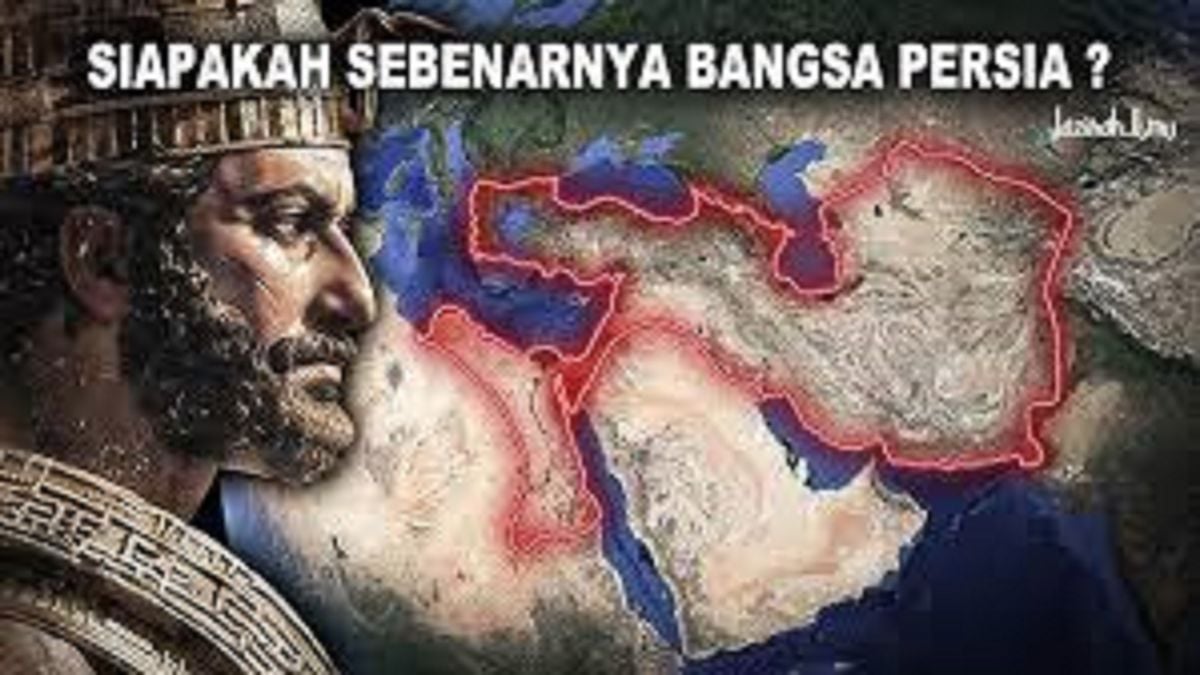
PAKU MEDIA, TEHERAN – In the midst of the global spotlight due to the conflict involving Iran with the United States and Israel, many people are starting to be curious about the origin of the name “Iran” and the long history of this nation.
Behind today’s geopolitical tensions, Iran holds the story of a rich and complex ancient civilization.
From Persia to Iran: A Meaningful Name Change
Before being known as Iran, this country was known as Persia for centuries. This name was widely used internationally until finally in 1935, King Reza Shah Pahlavi officially requested that his country be called “Iran”.
The name “Iran” itself is not a new term. This word comes from ancient historical roots referring to the “land of the Aryans”, which has been used by the ancestors of the inhabitants of the Iranian Plateau region since around 1700 BC.
In fact, during the reign of Darius I, the term Iran was used to refer to his territory.
Also read: US-Iran ceasefire overshadowed by dispute over control of the Strait of Hormuz
Population Origins and Ethnic Diversity
The indigenous people of Iran are believed to have come from the Caucasus steppe region migrating around 1500 BC. In the course of its history, this region experienced many waves of invasion and ethnic mixing.
Large groups such as the Aryans including the Medes and Parsa formed the main foundation of the early population. Over time, Iran developed into an ethnically diverse country, including Turkish-speaking communities in the northwest, Kurds in the west, and the Lur and Bakhtiari tribes in the Zagros mountains.
Apart from that, there are also minority groups such as Armenians, Assyrians and Jews who also color the social mosaic of modern Iran.
The Turning Point: The Entry of Islam into Persia
Major changes occurred in the 7th century, when the Persian Empire collapsed after the Qadisiyyah War and the Nahavand War. At that time, Muslim troops under the leadership of Umar bin Khattab succeeded in ending Persian rule led by Yazdegerd III.
Since then, Persian people who previously adhered to Zoroastrianism began to convert to Islam. This process not only changed religion, but also shaped culture, science, and government systems in the region.
Also read: Strait of Hormuz opens, US and Iran agree to end conflict for two weeks
The Birth of Great Dynasties
After being under the rule of the caliphate in Baghdad, the Persian region then gave birth to various large dynasties such as the Samanid Dynasty, Ghaznavid Dynasty and Seljuk Dynasty.
However, one of the important milestones in modern Iranian history was the founding of the Safavid Dynasty in 1501 by Ismail I. This dynasty not only united the Persian region, but also established Shia Islam as the official state identity which is still a characteristic of Iran to this day.
From History to Modern Reality
The long journey from ancient Persia to modern Iran shows how a nation’s identity is formed from a combination of history, culture and politics.
The change of name from Persia to Iran is not just a symbol, but an affirmation of identity rooted in the nation’s long history.
Now, when Iran is once again at the center of world attention due to geopolitical conflicts, understanding its historical background is important. Because, behind every event that occurs today, there are traces of the past that shape the direction of the country’s future.***