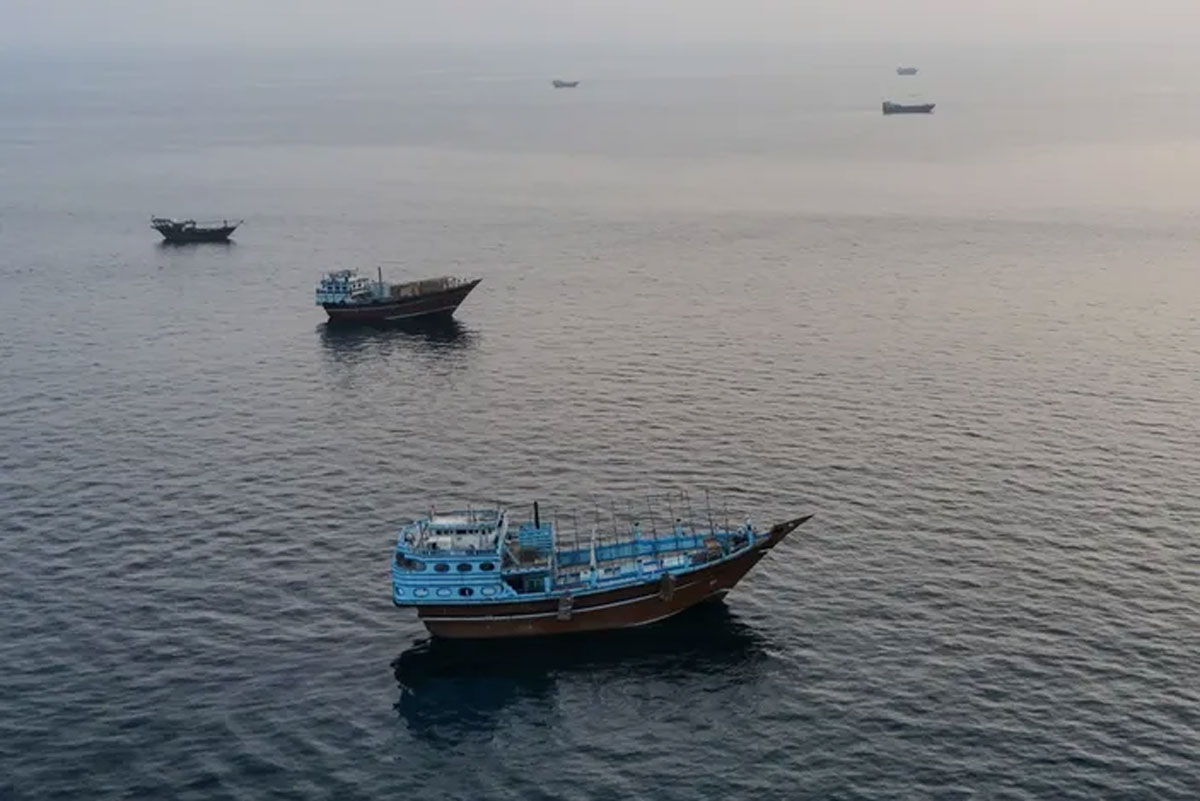
Iran announced that it has once again closed the Strait of Hormuz after its forces struck a vessel that was allegedly using an unauthorized shipping route on Sunday, July 12, 2026. Tehran warned that any retaliation over the incident would be met with a “very severe response.”
Before the conflict, the Strait of Hormuz was reported to carry approximately one-fifth of the world’s oil supply, and Iran’s effective blockade of the strategic waterway has reportedly driven up global energy prices and fueled worldwide inflation.
Iran’s Islamic Revolutionary Guard Corps (IRGC) Navy stated that it had struck and intercepted a vessel that had switched off its tracking system and was navigating through an unauthorized route. According to the IRGC, several vessels had attempted to pass through the waterway using unauthorized routes and ignored repeated warnings to change course.
As reported by Reuters, the closure of the Strait of Hormuz will remain in effect “until further notice” and until “the end of United States intervention in the region.”
The IRGC also issued a stern warning.
“Any act of aggression against Iran will be met with a very severe response, and new enemy bases in the region will become targets,” the statement said.
Meanwhile, diplomatic efforts continue. Iranian Foreign Minister Abbas Araqchi met with Omani Foreign Minister Sayyid Badr Albusaidi in Muscat to discuss an appropriate mechanism for ensuring the safe passage of vessels through the Strait of Hormuz.
According to reports, Iranian and Omani negotiators will continue discussions at both the technical and political levels.
Earlier, Muscat had drafted a proposal allowing free navigation through the southern shipping corridor within Oman’s territorial waters. However, the plan would still require Iran’s approval, although it would not involve the imposition of transit fees.
Earlier this week, three commercial tankers from Qatar and Saudi Arabia came under attack, prompting the United States to launch strikes against several locations in Iran.
The United States also revoked permits allowing the sale of Iranian crude oil on Tuesday following the attacks on the vessels.
In a post on X (formerly Twitter) on Friday, July 10, Araqchi accused the United States of violating the ceasefire agreement.
“There can only be mutual compliance,” he wrote.
Meanwhile, President Donald Trump said that the United States and Iran had agreed to continue negotiations.
“But the United States has made it very clear to them that the CEASEFIRE IS OVER,” Trump said.
The situation has escalated further following remarks by Iran’s new Supreme Leader, Ayatollah Mojtaba Khamenei, who vowed to avenge the death of his father, Ali Khamenei.
“We pledge to avenge the blood of our martyred leader and all the martyrs,” he said.***