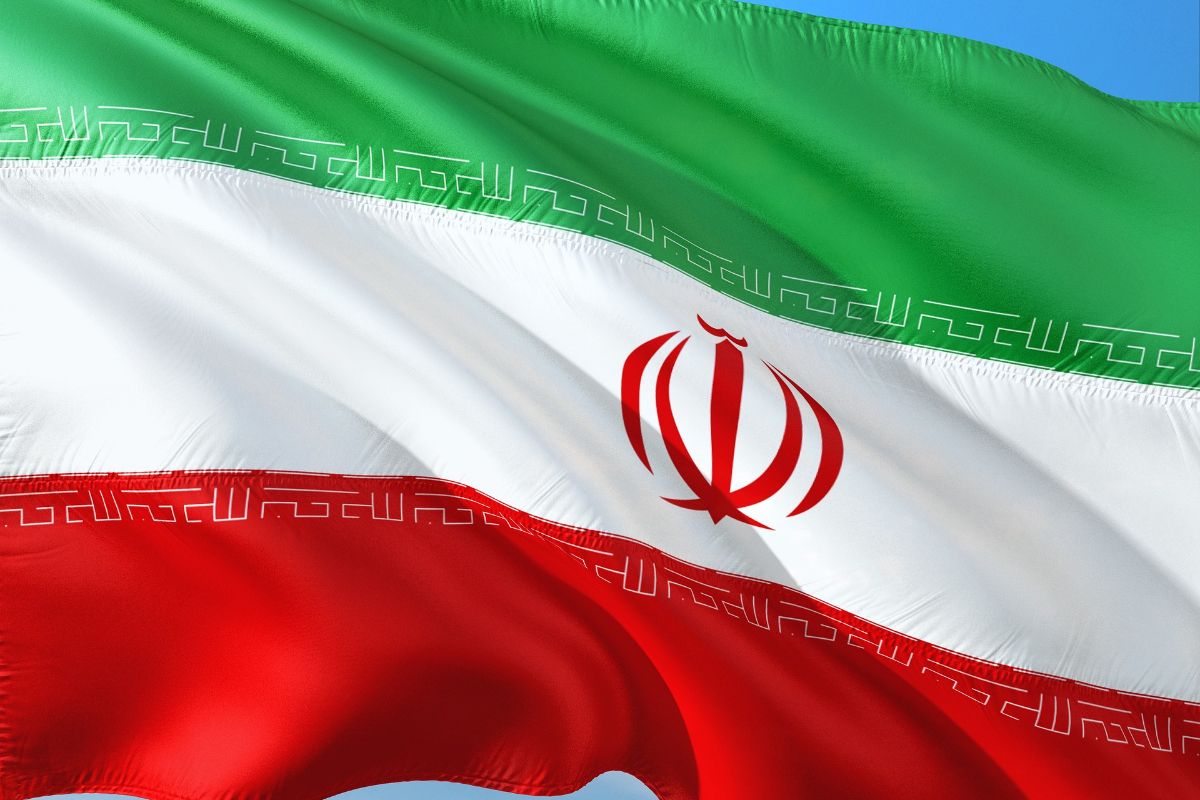
The government of the Islamic Republic of Iran has firmly declared that it will not allow the United States to dictate when war and peace should take place in the Middle East.
Iranian Foreign Ministry spokesperson Esmaeil Baghaei stated that Washington is now trapped in a quagmire of its own making following the military aggression of the past five months.
“We will not allow the United States to determine the timing of war and peace,” Baghaei said during a weekly press conference in Tehran, as reported by Al Jazeera on Monday, July 27, 2026.
Tehran’s firm stance comes amid the sudden suspension of airstrikes and the reopening of diplomatic channels through mediation by Oman, Qatar, and Pakistan.
Armed confrontation between the two countries has eased after the U.S. military halted its daily bombing campaign, which was followed by Iran suspending its retaliatory strikes in the Persian Gulf.
Iranian military spokesperson Amir Mohammad Akraminia confirmed on Monday, July 27, 2026, that Tehran had also suspended its military operations following Washington’s decision to halt its attacks.
“Our strategy is fundamentally based on retaliation. We have also suspended our retaliatory operations,” Akraminia told reporters.
However, he warned that the current situation represents only a temporary pause and that the conflict would inevitably expand if the United States resumed its military actions.
The White House’s decision to exercise restraint is believed to be closely linked to the arrival of an Omani delegation in Tehran to discuss the security of maritime navigation through the Strait of Hormuz.
U.S. Ambassador to the United Nations, Mike Waltz, confirmed that President Donald Trump had deliberately allowed room for diplomacy.
“The President is giving some space for potential talks,” Waltz said during an interview with Fox News.
In addition to ongoing diplomatic efforts, international media reports indicate that the Pentagon has growing concerns over the depletion of U.S. interceptor missile stockpiles in the region.
Maritime Blockade
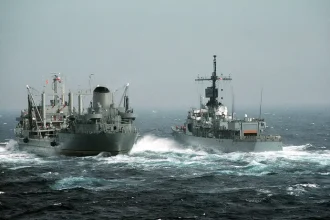
Although the bombing campaign has stopped, the U.S. Central Command (CENTCOM) has emphasized that its maritime blockade of Iran’s southern ports remains fully in force.
U.S. forces have reportedly intercepted, disabled, and boarded several tankers accused of transporting Iranian oil.
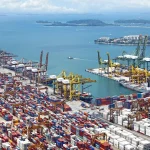
Meanwhile, Iran’s Islamic Revolutionary Guard Corps (IRGC) has continued stopping commercial vessels attempting to transit the Strait of Hormuz, keeping tensions along one of the world’s most important energy shipping routes at a high level.
The external military pressure has been accompanied by stern warnings from U.S. allies in the Gulf region.
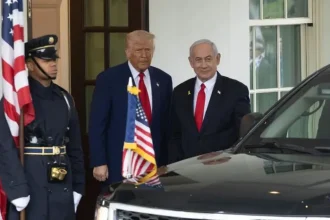
Israeli Prime Minister Benjamin Netanyahu warned that any renewed Iranian retaliation would result in even greater destruction.
“Any renewed attack against Israel would be a grave mistake and would provoke a very, very strong response,” Netanyahu said before departing for Washington.
The warning underscores the continued fragility of the regional security environment, with the risk of the conflict erupting into open warfare at any time.
Export disruptions and the ongoing maritime blockade have begun placing significant pressure on Iran’s domestic economy.
According to Iran’s Ministry of Oil, crude oil sales generated US$11.5 billion during the wartime period. However, the country faces the prospect of declining state revenue if the blockade continues.
The situation has been worsened by damage to energy infrastructure that has eliminated one-third of Iran’s natural gas supply, triggering electricity shortages and creating a daily fuel deficit of more than 20 million liters.
To address the growing budget shortfall, the government is considering raising domestic fuel prices—a highly sensitive policy that could potentially trigger another wave of social protests across the country.***