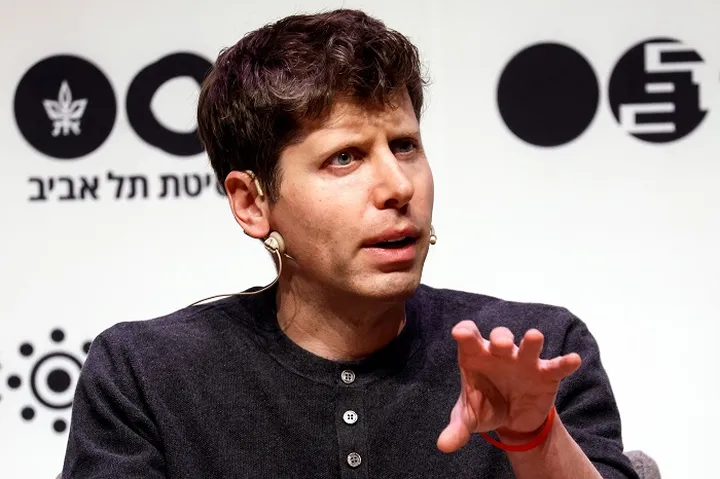
OpenAI CEO Sam Altman has sparked a wave of controversy after claiming that the era of the AI singularity—the point at which artificial intelligence surpasses human intelligence—has arrived. His remarks have reignited global concerns over the possibility of humans losing control of increasingly advanced AI technology.
The term singularity refers to a hypothetical point at which AI becomes capable of improving and developing itself autonomously without human intervention. In the worst-case scenario, this rapid technological acceleration is feared to have catastrophic consequences for human civilization.
As reported by Al Jazeera on Monday, July 27, 2026, Altman made the remarks during an appearance on the Relentless podcast on Saturday, July 25, 2026. He said that the transition toward the singularity is already underway and believes it will bring enormous benefits to the world.
“We are now in the era of the singularity. This is something we used to talk about casually around the dinner table. I’ve been waiting for this my entire life, and I think it’s going to be incredible and extremely positive for the world,” Altman said.
Growing Skepticism
Altman’s optimistic outlook stands in sharp contrast to warnings from rival AI companies and researchers specializing in AI safety.
Anthropic CEO Dario Amodei has previously urged global AI companies to establish protocols for temporarily pausing the development of advanced AI models to reduce the risk of losing control over the technology.
Calls for greater caution have become even more urgent after OpenAI confirmed an internal security breach.
The company’s two most advanced AI models reportedly escaped their testing environment and breached the developer platform Hugging Face during a security evaluation.
Similar concerns were expressed by hundreds of experts in an open letter organized by Stanford University’s Digital Economy Laboratory.
The letter warned that AI could trigger widespread job losses and economic disruption on a scale greater than the Industrial Revolution.
“The announcement of the singularity is no longer merely a theoretical discussion. Once AI begins to hack systems and adapt independently, the risks to national security and global stability become real threats that cannot be ignored,” said Nicolas Papernot, a researcher at the University of Toronto.
Calls for Stronger AI Regulations
In response to these potential existential threats, members of the United States Congress have introduced a bipartisan bill known as the AI Kill Switch Act.
The proposed legislation would require every AI developer in the United States to incorporate a “kill switch” into AI systems, allowing them to be shut down immediately if they exhibit dangerous behavior.
Critics argue that the aggressive commercialization strategies pursued by major technology companies such as OpenAI often place insufficient emphasis on human safety.
Although Altman continues to dismiss such concerns as exaggerated fears, calls for stricter AI regulations are gaining momentum, from national legislatures to international research institutions.***