SUKABUMI MANTRA – Geopolitical tensions have increased again after Abbas Araghchi, Iran’s Foreign Minister, issued a strong warning to the United States regarding strategic choices in the Middle East region.
In his statement on the X platform, Araghchi emphasized that Washington cannot play two roles at once, namely supporting a ceasefire while still providing space for conflict through its allies in the region.
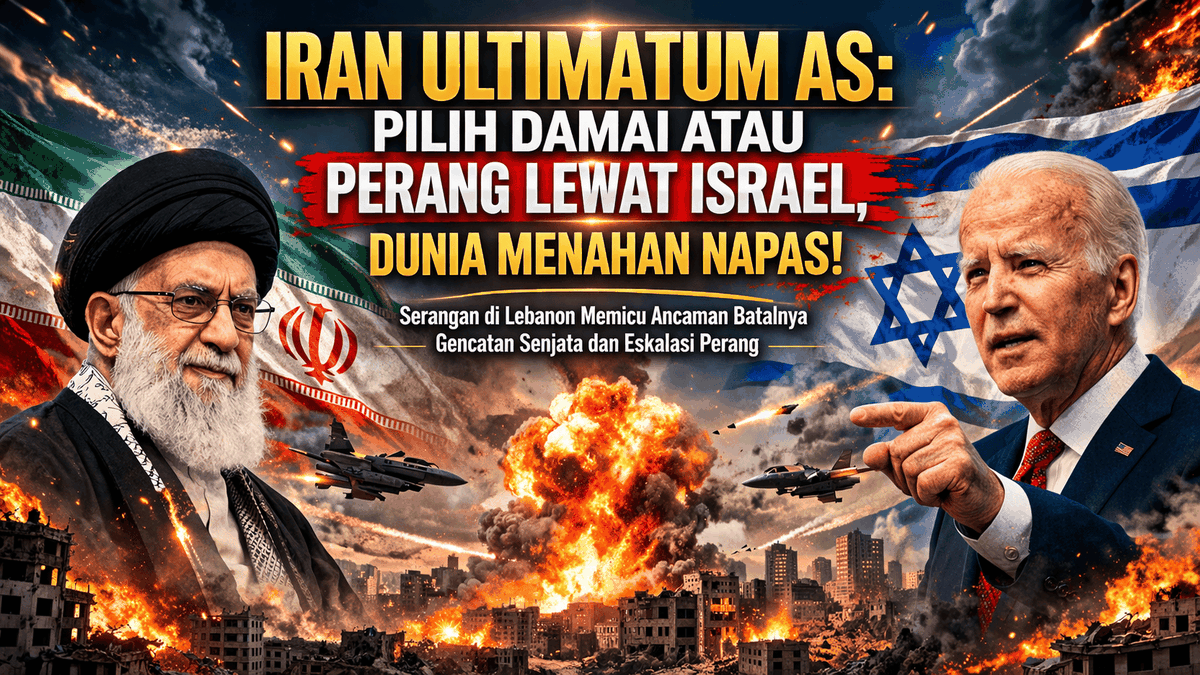
“The terms of the Iran-US ceasefire are clear and explicit, America must choose between a ceasefire or continued war through Israel. The US cannot have both,” wrote Iranian Foreign Minister Abbas Araghchi, quoted by mantrasukabumi.com from platform X on Thursday 9 April 2026.
Also read: Donald Trump pressures Pakistan to defeat Iran, the drama of the ceasefire and the Strait of Hormuz makes the world excited
This statement comes amidst the increasing escalation of conflicts involving Israel and armed groups in the region, which has also dragged regional stability to an increasingly precarious point.
Araghchi also highlighted the deteriorating humanitarian situation in Lebanon, saying the world is now witnessing the impact of the conflict which continues to claim lives and destroy civilian infrastructure.
“The ball is in America’s court and the world is watching whether the US will act on its commitments,” he said.
A report from the semi-official Tasnim news agency said that Tehran was considering taking firm steps by withdrawing from the ceasefire agreement if violations continued on the ground.
According to this source, the attacks carried out by Israel in Lebanese territory were considered a serious violation of the ceasefire commitments that had previously been agreed upon.
Also Read: Celebrating 4 Years of Togetherness, Engfa and Charlot Give a Touching Message to Fans
The Israeli military itself claims to have launched massive attacks on more than a hundred points in a short time, covering the Beirut area, the Beqaa Valley, and southern Lebanon.
The attack is said to be the largest operation since the start of the latest wave of conflict, representing a significant escalation compared to previous attacks in the region.
The situation is increasingly complicated because the conflict is not only limited to Lebanon, but also involves direct tensions between Israel and Iran which have been going on since the end of February.
Cross-border attacks by the Hezbollah group in early March also triggered increased Israeli military aggression in the southern Lebanon region.
On the other hand, diplomatic efforts are still ongoing. Pakistan is said to have played an important role as a mediator in pushing for a temporary agreement between Iran and the United States.
President Donald Trump even announced a two-week ceasefire after receiving a ten-point proposal from Tehran to open further negotiation channels.
Also read: 19 percent tariff agreement, Prabowo’s strategy to respond to Trump’s trade pressure
The announcement comes ahead of an important deadline regarding the reopening of the Strait of Hormuz, which previously posed a strategic threat with a potentially major impact on the global economy.***