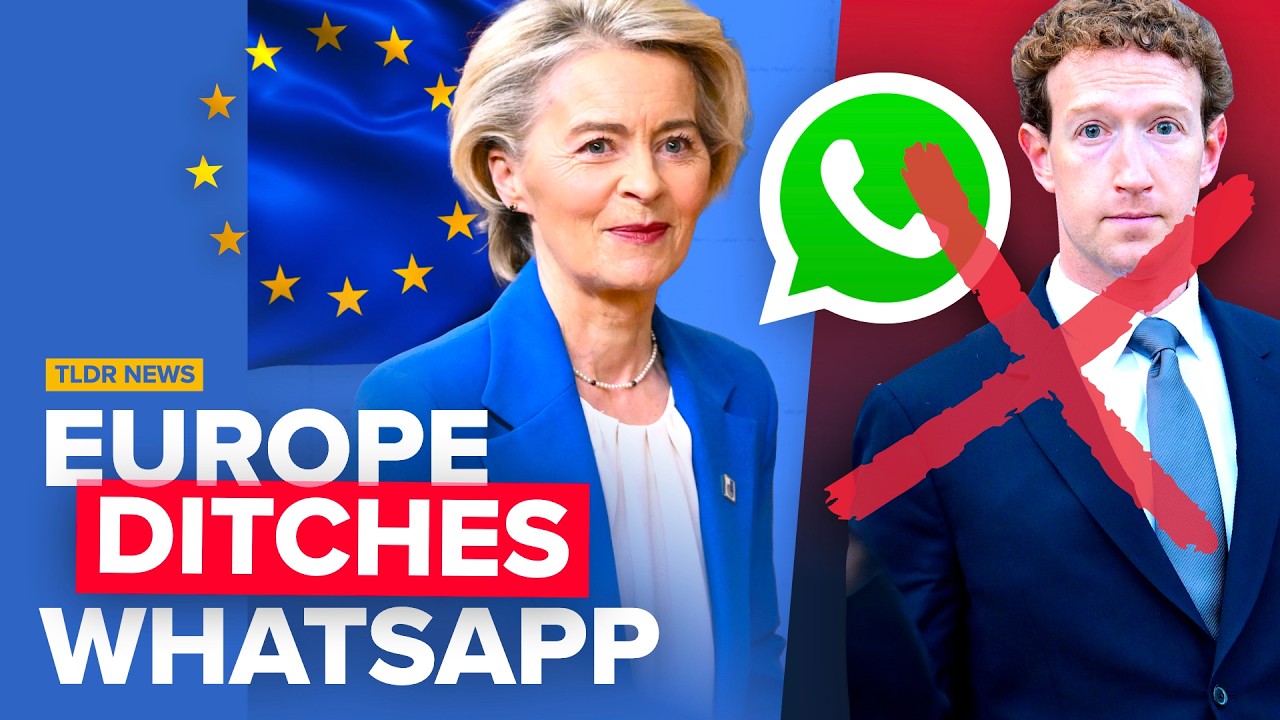
MALANGRAYA.CO – A number of European countries are starting to systematically abandon popular instant messaging applications such as WhatsApp and Signal. This step was taken in response to concerns about strategic dependence on United States technology as well as increasing cybersecurity risks that threaten the communications of public officials.
Governments in France, Germany, Poland, the Netherlands, Luxembourg and Belgium have begun launching internal messaging services for officials to share sensitive information. This step aims to replace the encrypted messaging applications currently used with local alternatives that are fully under government control. Even the North Atlantic Treaty Organization (NATO) has its own messaging app, while the European Commission plans a similar switch later this year.
WhatsApp is owned by US tech giant Meta, while Signal is managed by a US-based non-profit organization and a broad community of open source software enthusiasts. This dependence on foreign platforms is considered to pose a major risk to the country’s information security.
Also read: WhatsApp prepares messaging feature for non-users, can chat without registering an account
“Our communications today often take place via platforms we do not control,” said Willemijn Aerdts, the Netherlands’ digital minister, in a statement to POLITICO. “In a world where technology is increasingly used as a tool of power, that poses risks.”
Brandon De Waele, Director of Belgian Secure Communications, the Belgian federal government agency responsible for his country’s new secure application, stressed the importance of data sovereignty. “Everyone in Europe is increasingly aware of sovereignty… For us, it’s about data sovereignty.”
Cyber Threats and Political Vulnerabilities
WhatsApp and Signal themselves have faced cybersecurity challenges in recent weeks. Last month, dozens of cybersecurity agencies warned that Russian hacking groups were targeting political and government officials through the messaging app with high-profile phishing attacks.
This risk is also becoming very real in Brussels: The European Commission asked a number of its senior officials to shut down groups on the Signal app, as POLITICO reported this month. The European Union also fell victim to a series of cybersecurity breaches that affected, among other things, their mobile device management systems.
Also Read: WhatsApp is Getting More Exciting, Selfie Photos Can Become Stickers! This is How
Those working with European governments on developing internal messaging solutions note significant changes since US President Donald Trump returned to office early last year.
“The difference we’ve really felt over the last 12 months is the urgency from governments,” said Matthew Hodgson, CEO of Element, a company that built technology used by several European governments for secure messaging apps.
Hodgson and others attribute this acceleration to specific events such as Signalgate, when top Trump administration officials exchanged secret military plans via Signal, as well as US sanctions against the International Criminal Court that resulted in a prosecutor being cut off from his email last year. A major disruption to Amazon Web Services in October also laid bare Europe’s dependence on US technology.
For some, this decision is more practical than philosophical. “This trend is about reconciling the differences between how official communications should occur, and how they actually occur in practice,” said Lindsay Gorman, Managing Director at the German Marshall Fund. “The bigger step is simply to address the gap between how government should communicate and how people actually communicate.”
Also Read: Elon Musk Launches AI-Based Game Studio at xAI, Challenges the Dominance of Giant Gaming Companies
The War Against the Dominance of US Tech Companies
The WhatsApp antitrust issue is just one part of a broader fight between the European Union and US tech giants. Europe is seeking to reduce its strategic dependence on foreign technology, especially the US, and build what is called European digital sovereignty.
A SWG poll Europe survey conducted in January found that a majority (59%) of Europeans considered blocking digital services by the US to be a clear and concrete risk, while 86% agreed that the risk was at least reasonable and should not be ignored.
In response, a number of European countries are now rolling out secure, open source alternatives to WhatsApp in the public sector. France has a CHAP service with claims of more than 600,000 users across all departments of the country. Belgium launched Beam last month, targeting around 750,000 civil servants and military personnel. The Dutch government is also piloting a project using one of the European alternatives with the long-term goal of adopting a messaging platform that is completely controlled by the Dutch government.
Essentially, these European domestic alternatives seek to provide more secure and sovereign messaging services, comply with EU regulations on data and advertising, and protect users from the risk of surveillance or termination of access by foreign governments. ***