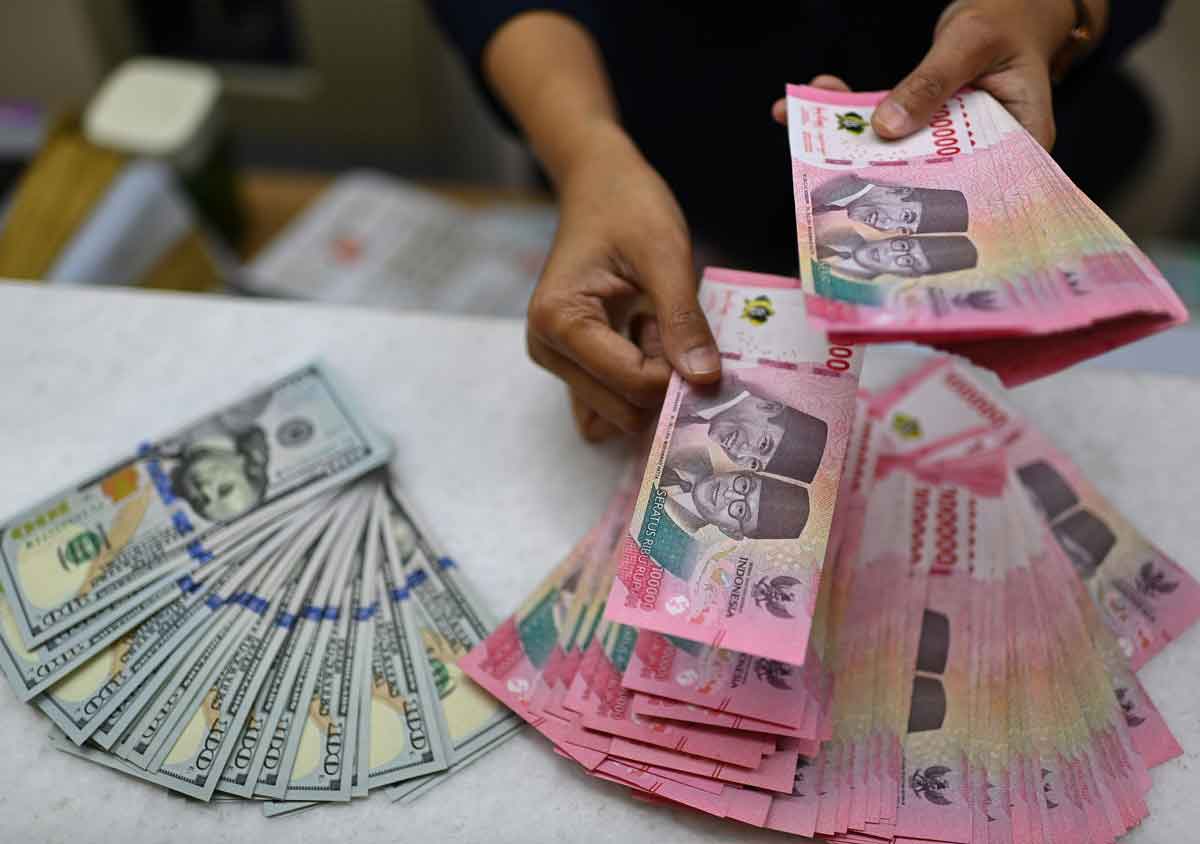
The Indonesian rupiah staged a recovery on Wednesday, June 10, 2026, after briefly weakening beyond the psychological level of Rp18,000 per U.S. dollar for two consecutive trading days. By the close of trading, the rupiah strengthened to Rp17,953 per dollar, extending gains recorded earlier during the morning session.
The rebound offered temporary relief to financial markets and businesses closely monitoring exchange-rate volatility. However, market observers cautioned that the improvement may not yet signal a sustained recovery.
Currency analyst Ariston Tjendra noted that the rupiah’s recent appreciation remains vulnerable to geopolitical developments, particularly the escalating tensions in the Middle East. Fresh military actions involving the United States and Iran near the Strait of Hormuz have once again heightened uncertainty in global markets.
According to Ariston, a deeper and more sustainable strengthening of the rupiah would depend heavily on a reduction in geopolitical tensions between Washington and Tehran.
“A lasting appreciation will require a more stable relationship between the United States and Iran. If the conflict escalates further, the rupiah could quickly come under pressure again,” he said in Jakarta on Wednesday.
Despite external challenges, Ariston emphasized that both the Indonesian government and Bank Indonesia (BI) have continued implementing measures designed to limit excessive depreciation of the national currency.
“I believe the government and Bank Indonesia are actively pursuing policies aimed at stabilizing the rupiah and preventing sharper declines,” he added.
Bank Indonesia Sees Stronger Rupiah in 2027
While short-term risks remain, Bank Indonesia Governor Perry Warjiyo expressed confidence that the rupiah will enter a stronger trajectory in 2027.
The central bank projects the currency to trade within an average range of Rp16,800 to Rp17,500 per U.S. dollar next year, in line with assumptions outlined in the government’s 2027 Macroeconomic Framework and Fiscal Policy Principles (KEM-PPKF).
Speaking during a hearing with House of Representatives Commission XI at the Parliament Complex in Senayan, Jakarta, Perry outlined five key factors supporting the central bank’s optimism regarding the future appreciation of the rupiah.
1. Easing Global Economic Uncertainty
The first pillar rests on expectations that global economic conditions will become more stable. Bank Indonesia anticipates stronger global growth and improving investor confidence, factors that could encourage capital inflows into emerging economies, including Indonesia.
Although global turbulence remains difficult to predict, Perry believes conditions are unlikely to be as challenging as those experienced this year.
2. Stronger Domestic Economic Fundamentals
The second factor is Indonesia’s improving economic foundation. Higher economic growth, controlled inflation, and a healthy balance of payments are expected to strengthen investor confidence.
The central bank also highlighted Indonesia’s attractive investment returns, expanding financial markets, and sufficient foreign-exchange reserves as additional strengths supporting the rupiah.
3. Export Policy Reforms Could Increase Foreign Currency Supply
A third source of optimism comes from ongoing government efforts to reform natural-resource export management.
These include the planned establishment of PT Danantara Sumberdaya Indonesia (DSI) and the implementation of revised regulations governing export proceeds from natural resources.
According to Perry, these initiatives could increase state revenues while boosting the supply of foreign currency in the domestic market. A larger foreign-exchange supply would help strengthen liquidity and support exchange-rate stability.
4. Continued Central Bank Intervention
Bank Indonesia has reaffirmed its commitment to using all available policy instruments to maintain currency stability.
These measures include intervention in the spot market, domestic forward transactions, and overseas market operations. The central bank also plans to ensure adequate banking-sector liquidity while further developing money and foreign-exchange markets.
Such efforts are intended to create a more attractive environment for international investors and facilitate stronger foreign capital inflows.
5. Stronger Coordination Between Fiscal and Monetary Authorities
The final pillar involves closer cooperation between Bank Indonesia and the Ministry of Finance.
Both institutions have pledged to strengthen macroeconomic stability through coordinated fiscal and monetary policies. Their shared objective is to support rupiah stability, enhance Indonesia’s investment appeal, and maintain sufficient liquidity across the banking sector.
“We will continue directing fiscal and monetary policies within our respective mandates to strengthen the rupiah, improve investment returns for foreign investors, and safeguard banking liquidity,” Perry explained.
Inflation Expected to Remain Under Control
During the same parliamentary meeting, Perry projected Indonesia’s inflation rate in 2027 to remain within Bank Indonesia’s target range of 2.5 percent, plus or minus 1 percent.
That places expected inflation between 1.5 percent and 3.5 percent, supported by a resilient economy and continued coordination between the government and the central bank in maintaining price stability.
Why the Rp18,000 Level Matters
The rupiah’s brief move beyond Rp18,000 per U.S. dollar attracted significant attention because it represents an important psychological threshold for businesses, investors, and consumers.
A weaker rupiah can increase the cost of imported goods, raw materials, fuel, and foreign debt repayments. On the other hand, exporters may benefit from a more competitive exchange rate, particularly companies earning revenue in U.S. dollars.
For policymakers, maintaining a balance between currency stability and economic growth remains a critical challenge amid ongoing global uncertainty.
Outlook for the Indonesian Rupiah
Although the rupiah has regained some ground, market sentiment is likely to remain sensitive to geopolitical developments, global interest-rate trends, and foreign capital flows over the coming months.
Investors will closely monitor developments in the Middle East, U.S. monetary policy, and Indonesia’s economic performance. Should global conditions improve and domestic reforms continue to progress, the rupiah could gradually move toward the stronger range projected by Bank Indonesia for 2027.