CIREBON NEWS – President of the United States (US), Donald Trump again issued a threat to create ‘Hell’ for Iran, if Tehran does not immediately open the Strait of Hormuz.
According to Donald Trump, there will be a Bridge Day in the Mullah Country. This means that the US military will destroy a number of important bridges for Iranian citizens, as has happened with the B1 Bridge.
Trump casually called his plan, which many experts say would amount to a war crime, as “Bridge Day” at a time when the US and Israel have bombed several Iranian universities, hospitals, schools, research centers and pharmaceutical companies.
Also Read: Three TNI Soldiers Serving in the UN Peace Corps Died as a Result of Israeli Attacks on Hezbollah
According to Iran’s Bridge Management System (BMS), the country has around 300,000 bridges and technical structures. Only about 185 bridges exceed 100 meters (330 feet) in length, and only 42 bridges have a main span – the longest unsupported distance between two consecutive piers – of more than 50 meters (165 feet).
Based on their scale and economic importance, here are the five most famous bridges in Iran that could be targeted for destruction by US forces:
1. Persian Gulf Bridge (Qeshm Island)
Location: Hormuzgan Province
Dimensions: Length 3.4 km (2.1 miles)
Status: Incomplete (15 to 18 percent physical progress)
Background: The Persian Gulf Bridge has been a “dream project” for more than 50 years, and the foundation stone was laid in 2011.
Although the bridge is still incomplete due to funding constraints, the foundations and its large underwater caissons have been installed. Once completed, the bridge will connect Qeshm Island – Iran’s largest island in the Persian Gulf, which is believed to house underground missile arsenals – to Bandar Abbas, Iran’s largest land port.
What’s at stake: Even in its current state, the bridge represents an investment of up to $700 million and is the centerpiece of the North-South International Transport Corridor, which also includes India and Russia.
Targeting its massive concrete foundations would erase decades of national planning and directly attack China-backed credit lines, ultimately killing Iran’s hopes of having a direct link to the island from the mainland.
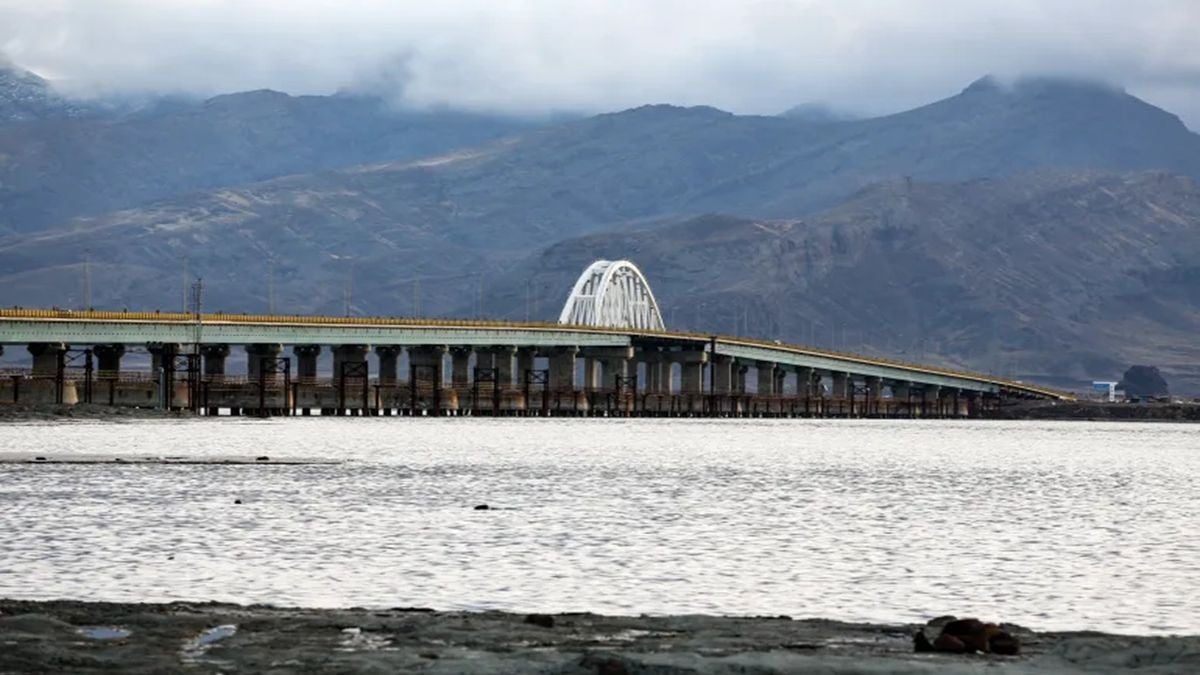
2. Urmia Lake Bridge (Shahid Kalantari Bridge)
Location: between East and West Azerbaijan provinces
Dimensions: 1.7 km (1 mile) long
Background: inaugurated in November 2008 after 29 years of very complex development due to the very salty and muddy nature of the lake bottom.
Risk: This bridge connects Tabriz and Urmia, reducing the distance between the cities from 240 km to 130 km (150 to 80 miles). In addition to cutting off civilian movement between the two major provinces, its destruction could trigger an ecological disaster by dumping 35 km (22 miles) of steel and concrete pillars into an already shrinking lake.
3. Sadr Multi-Level Toll Road
Location: Tehran
Dimensions: 11 km (7 miles) long, supported by 234 pillars
Background: Inaugurated in November 2013, this bridge is the 11th highest bridge in the world and the longest double-decker bridge in the Middle East.
Also Read: IRGC Increases Attacks on UAE, Kuwait and Bahrain, Occurring…