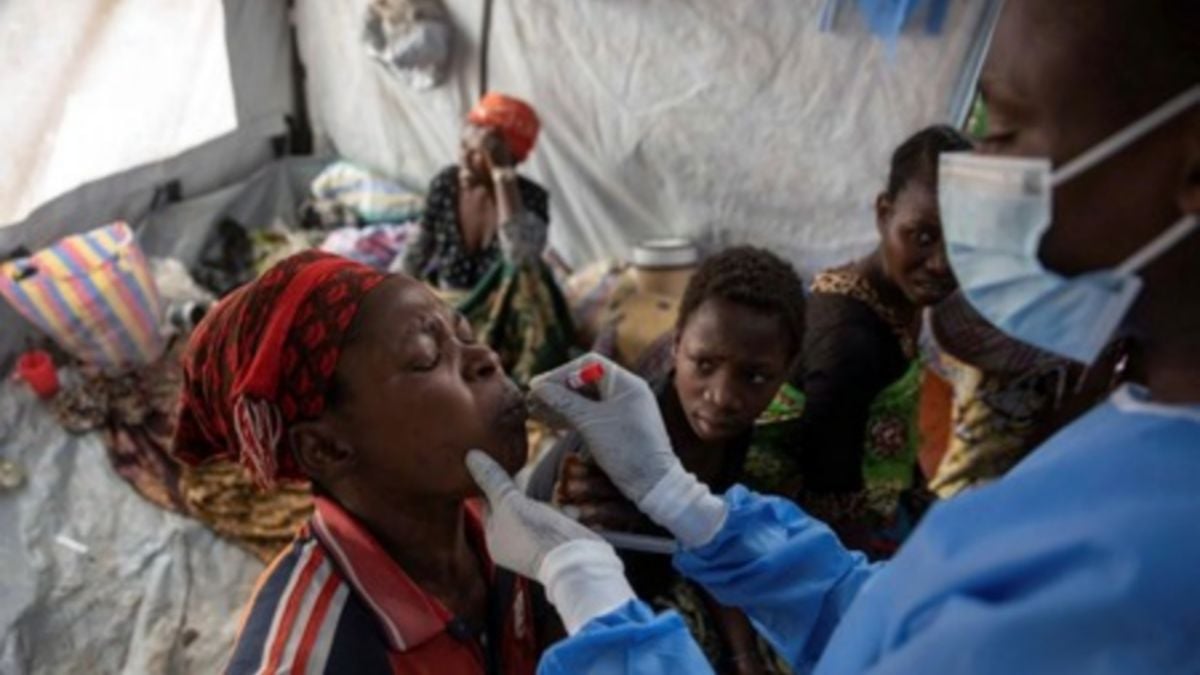
MEDIA PAKUAN, BUNIA, CONGO – The Ebola outbreak that has hit the Democratic Republic of Congo again is increasingly worrying. Not only is it attacking civilians, the deadly virus is now also hitting health workers who are on the front line of handling the outbreak.
The latest data shows that at least 75 health workers were infected with Ebola, while 17 of them died after being infected while carrying out their duties. This situation is a signal of how serious the spread of the disease is which is now centered in the eastern region of the country.
At the same time, more than 270,000 refugees, mostly women and children, live in cramped conditions in dozens of holding camps that risk becoming new centers for the deadly outbreak.
Refugee Camps Turn into High Risk Zones
According to the latest humanitarian report, more than 60 refugee camps are spread across Ituri Provincean area that is now the epicenter of the spread of Ebola.
Many camps are reportedly facing a crisis of basic facilities. Access to clean water, proper sanitation and health services is still very limited. This condition makes efforts to prevent disease transmission much more difficult.
Concerns increased after at least 13 people were reported to have died in two refugee camps in Bunia in the period 17 to 18 June 2026.
Emergency response teams are currently investigating whether the deaths are directly related to the ongoing Ebola outbreak.
Also read: WHO is worried that the deadly Ebola outbreak is spreading in Central Africa, 131 people are reported to have died
Bunia Becomes the Center for the Spread of the Plague
Since April 2026, at least 62 deaths have been recorded in various refugee camps around Bunia. The city, which is the capital of Ituri Province, is now the center of the largest outbreak in the country.
According to the UN Office for the Coordination of Humanitarian Affairs, the combination of overcrowding, low public trust in health facilities, and weak implementation of prevention protocols has created extremely risky conditions.
Handling bodies that do not comply with health procedures is also said to be one of the factors that accelerates the spread of the virus.
“These deaths occurred amidst a wider outbreak of Ebola in Bunia,” OCHA said in a statement.
Nearly 900 Cases, Hundreds of Deaths
The epidemiological situation in the eastern region of Congo shows worrying trends.
Until mid-June 2026, local health authorities reported there were 896 confirmed Ebola cases spread across Ituri Province, North KivuAnd South Kivu.
Of these:
-
232 people died
-
78 patients successfully recovered
-
Thousands more are still being monitored and handled
Most worryingly, more than 90 percent of cases come from Ituri Province, indicating that the region remains a major hotspot for the spread of the virus.
Medical Personnel Become Victims on the Front Line
Organization World Health Organization assesses that the high number of health workers who are infected reflects the large risk faced by officers in the field.
They not only have to treat large numbers of patients, but also work amidst limited facilities and high population mobility in conflict areas.
With 75 health workers infected and 17 dead, WHO warned that local health systems could potentially come under greater pressure if infections among health workers continue to increase.
Also Read: Guinea Reports First Case of Lassa Fever: Similar to Ebola Virus
Spread extends to 33 Health Zones
The current Ebola outbreak is no longer limited to one particular region. WHO notes the virus has spread to the least 33 health zones in the three main provinces affected.
This expansion of the distribution area makes contact tracing, patient isolation and vaccination efforts increasingly complex.
Health experts assess that quick steps are needed to prevent the outbreak from developing into a larger health crisis in the Central African region.
Humanitarian Funds are Starting to Run Short
In the midst of the increasing number of cases, another challenge faced is limited resources.
The United Nations, local governments and various humanitarian organizations continue to strive to strengthen public education, improve health facilities and improve sanitation in refugee camps.
But OCHA warned that the current need for assistance far exceeds available resources. As of mid-year, humanitarian response funding for 2026 had only met slightly more than half of the required target.
The Threat Isn’t Over Yet
With hundreds of thousands of refugees living in vulnerable conditions, hundreds of deaths continuing to increase, and dozens of medical personnel also becoming victims, the Ebola outbreak in Congo is now entering an increasingly worrying phase.
If response efforts are not strengthened and international support is not immediately increased, health experts warn that the spread of the virus could accelerate and reach a wider area in the coming months.
For residents living in refugee camps, the current threat is not only conflict and poverty, but also a deadly virus that continues to spread amidst the limitations they face every day.***