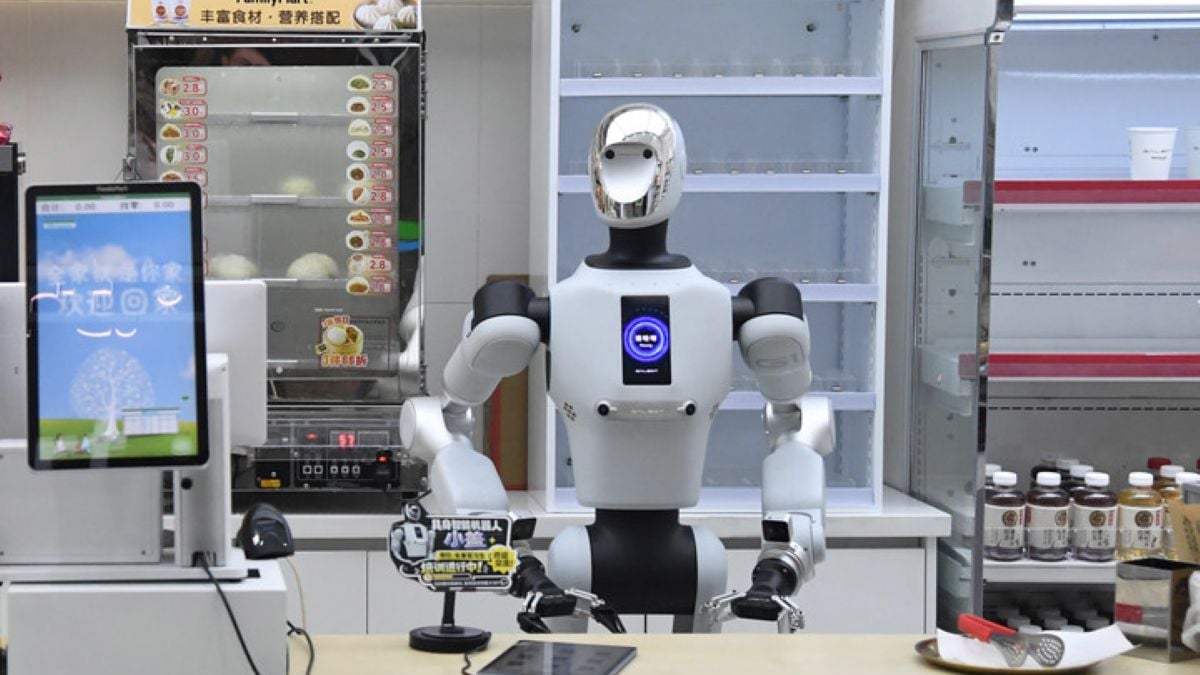
JABAR DESK – China launched a pioneering national “digital identity” system for its fast-growing humanoid robot sector. This system assigns each machine a 29-digit identity code for easy tracking and secure management.
The initiative establishes a unified framework to ensure safety, accountability and standardized governance, underpinned by a landmark national full lifecycle management services platform for humanoid robots launched at the same time in Beijing.
This platform, which was pioneered by the standardization body under China’s Ministry of Industry and Information Technology, is the operational backbone for new regulatory specifications that require every humanoid robot to have a unique identity code.
Developed by leading national standardization bodies, this digital identity acts as a comprehensive “passport” for each machine. The identity enables end-to-end tracing throughout the robot’s life cycle, from the manufacturing and sales stages, to daily use and final recycling.
This 29-digit code is carefully organized into four segments, namely two-digit country code, four-digit company code, six-digit product model code, and 17-digit serial number. The combination of these elements forms the foundation of a robust tracking system, enabling precise identification and tracking.
Yu Xiuming, vice president of the China Electronics Standardization Institute, said that providing this code allows robots to remain controllable in various fields, industries and roles. This step is designed to address core issues related to safety, management, and governance, ultimately accelerating the practical adoption of humanoid robots.
This increase in regulation occurs at a crucial moment. China’s humanoid robot industry is experiencing rapid growth, with domestic shipment volumes accounting for the dominant share of the global total by 2025. Although more than 500 major companies are concentrated in domestic centers, this rapid expansion has also led to growth constraints characterized by fragmented coding systems among manufacturers and unclear lines of responsibility.
Also Read: 5 Most Anticipated New Korean Dramas in June 2026, There are Lee Jae-wook, Seo In-guk and So Ji-Sub
The new standard enforces a strict “no code, no market access” rule. All robots sold or operated domestically must be registered according to regulations. Manufacturers are now required to recall products if common defects are found, while repair and resale of unused robots is strictly prohibited.
A senior official at China’s Ministry of Industry and Information Technology said that the platform creates a closed loop governance mechanism. Covering research and development (R&D), production, maintenance, and recycling, this system ensures risks can be prevented and responsibility can be clearly traced to the source.
Since its launch, more than 100 companies have joined the scheme and have published full lifecycle code for more than 28,000 humanoid robot units across 200 product models.
“The globalization of high-quality humanoid robots urgently requires a standardized management system with uniform rules,” Yu said. “This initiative not only provides a technical foundation for international mutual recognition and cross-border circulation, but also strengthens China’s role in shaping global standards and competitiveness in this sector.”***