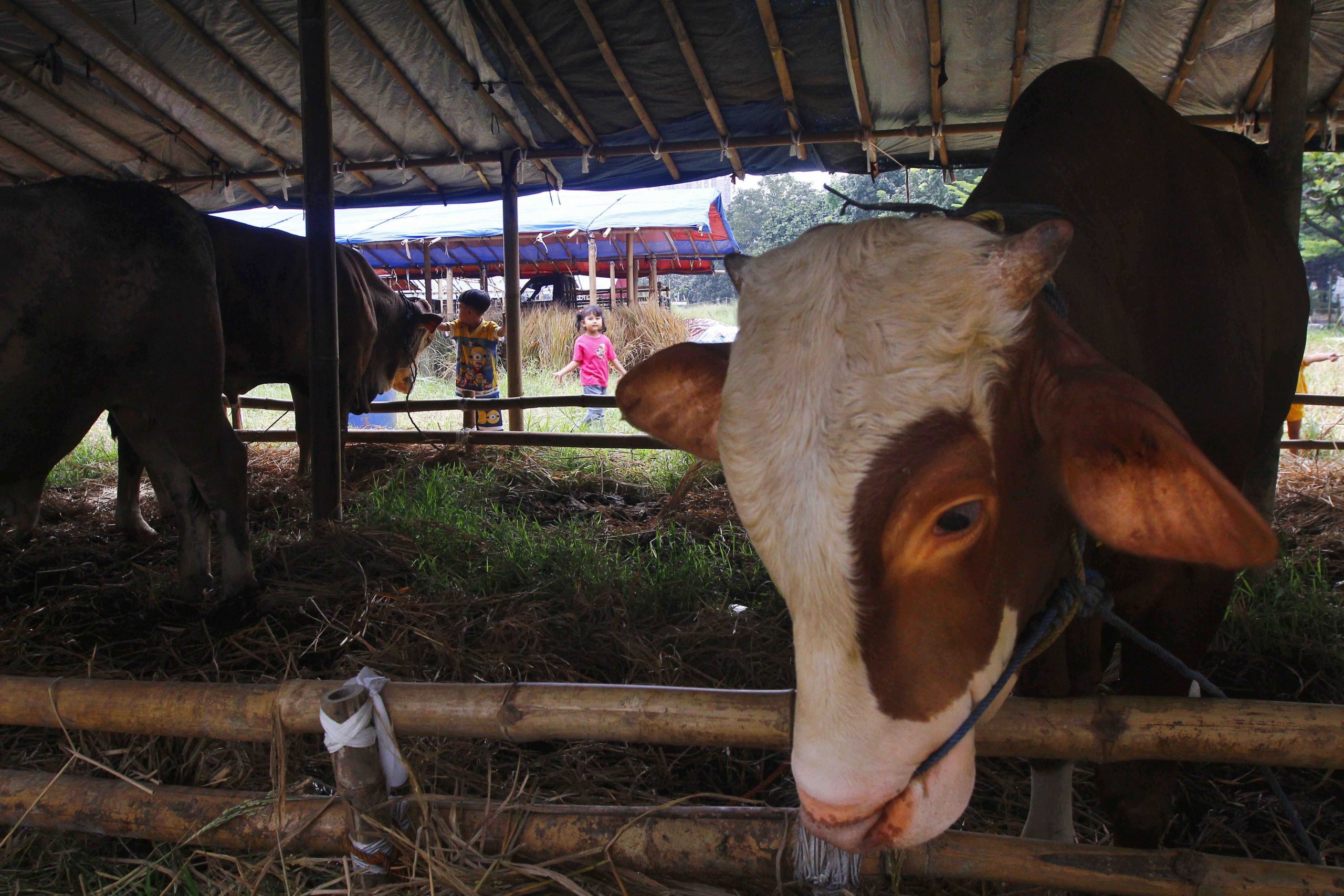
Indonesia remains heavily reliant on imports of cow hides, live cattle, and buffaloes, primarily sourced from Australia. This dependency stems from domestic production falling short of meeting the country’s demand for beef, milk, and leather materials.
Prof. Ronny Rachman Noor, an Ecological Genetics Expert from IPB University, explained that Indonesia is forced to import cattle and buffaloes because local breeds—such as Bali and Ongole crossbred (PO) cattle—grow slowly and have low productivity. Furthermore, cattle distribution is uneven; supply is concentrated in East Nusa Tenggara, Sulawesi, and Central Java, whereas demand peaks in Jakarta and West Java. This gap is widened by skyrocketing demand from a growing middle class and an expanding hospitality sector. Additionally, the implementation of the Free Nutritious Meal (MBG) program has further driven Indonesia’s need to import cattle and buffaloes.
“Australia is a preferred import partner due to its advantageous geographical proximity. It also offers competitive pricing at 4 USD or around Rp 71,000 per kilogram of live weight, superior livestock quality—particularly Brahman Cross cattle—and a highly organized export system,” Ronny stated in a press release on Monday, July 13, 2026.
Ronny noted that in 2025, live cattle imports from Australia were estimated to hit 583,000 heads, valued at 611.6 million USD. Beyond live cattle, Australia dominates over 60% of Indonesia’s imported frozen beef market, including offal exports that reached a value of 127 million USD in 2025.
In 2023, Indonesia also imported roughly 1,031 tons of cow hides worth 0.86 million USD. “Australian cow hides mostly come from Brahman Cross and feedlot cattle, which are characteristically thick and uniform. This material is ideal for shoes, bags, and furniture. Interestingly, these imports are also used for food consumption, such as making cattle skin crackers (krupuk kulit),” Ronny added.
In terms of buffalo commodities, Indonesia accounts for 3.52% of global imports, placing it among the world’s top four importers alongside the United States and Egypt. Throughout 2023, Indonesia imported live buffaloes worth 3.54 million USD from Australia’s Northern Territory, showing a fluctuating volume trend that regularly peaks ahead of Eid al-Adha.
Ronny warned that over-reliance on Australian imports creates economic vulnerability, particularly when the rupiah weakens against the Australian dollar (AUD). Whenever the rupiah depreciates, the cost of buying imported cattle and buffaloes automatically surges.
“Depending solely on Australia is risky, as it leaves Indonesia vulnerable to shifts in the economy, supply chains, and politics. Expanding our import network to India, Brazil, the US, and New Zealand is a safer approach to ensure food security and stabilize beef prices,” Ronny advised. Aside from diversifying import sources, Ronny also recommended that Indonesia strengthen its domestic feedlot, breeding, and leather industries.