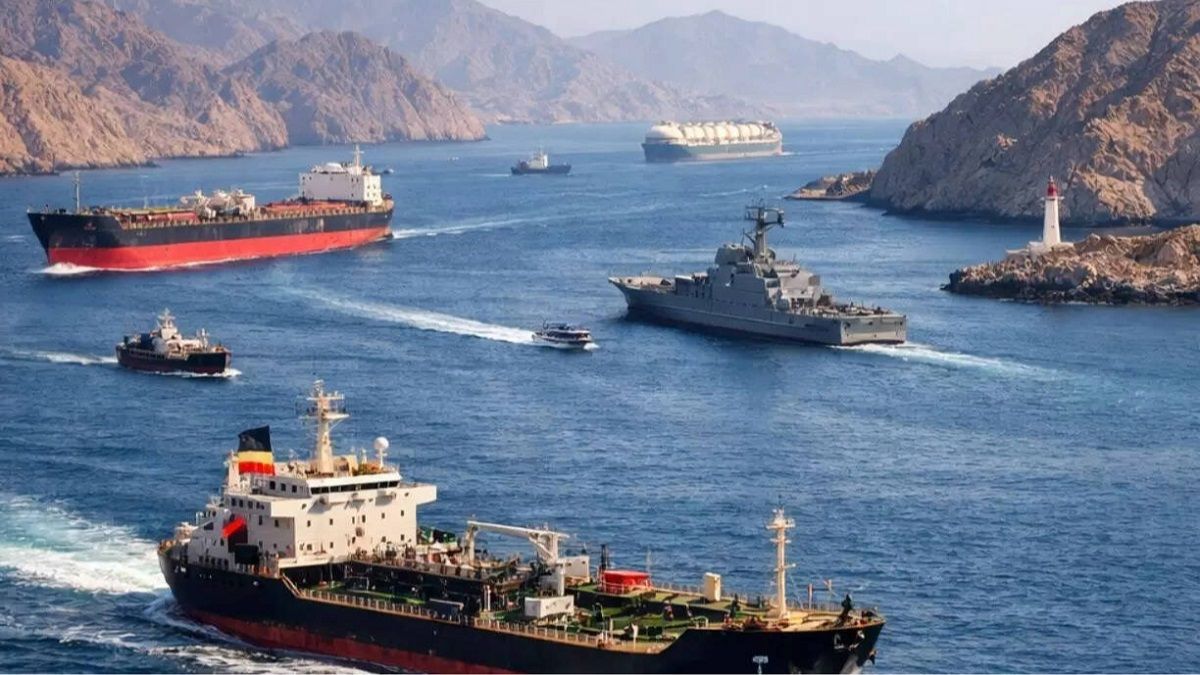
LEBAK PORTAL – The Iranian government announced its decision to close the Strait of Hormuz to international shipping activities. This decision was said to be a response to alleged violations of the peace memorandum by the United States as well as the continuation of Israeli military operations in Lebanese territory.
The announcement was made by the Khatam Al-Anbiya Central Headquarters on Saturday (20/6), as quoted by Iranian national media.
According to the Iranian military, Washington is considered to have failed to carry out the commitments contained in the memorandum of understanding or peace memorandum, especially regarding the implementation of a ceasefire in all areas affected by the conflict.
Iran Says Ceasefire Clause Is Not Implemented
In his statement, Khatam Al-Anbiya emphasized that one of the main points in the peace agreement was the cessation of conflict on all fronts, including in Lebanon.
However, Iran believes that this commitment has not been implemented effectively. The continuation of attacks in southern Lebanon is considered a violation of previously agreed agreements.
On that basis, Iran declared the closure of the Strait of Hormuz as a response to what it called the United States’ failure to implement the agreement and ongoing ceasefire violations.
The Strait of Hormuz Has a Strategic Role for Global Trade
The Strait of Hormuz is one of the most important shipping lanes in the world that connects the Persian Gulf region with international waters. This route is the main route for shipping oil and gas from energy producing countries in the Middle East to various global markets.
Any disruption to shipping activities in the region has the potential to impact the world’s energy supply chain and increase uncertainty in international markets.
Because of its strategic role, the development of the situation in the Strait of Hormuz has always been of concern to major countries, energy industry players and global financial markets.
Iran Threatens to Take Additional Steps
Apart from announcing the closure of the Strait of Hormuz, the Iranian military also issued a warning regarding developments in the conflict in Lebanon.
According to the statement, if Israel continues its military operations in Lebanese territory, Iran does not rule out the possibility of taking additional steps to encourage the implementation of the previously prepared peace agreement.
This statement shows that tensions in the Middle East region are still at a high level and have the potential to grow wider if there are no de-escalation efforts from all parties involved.
The Middle East situation continues to be in the world’s spotlight
Iran’s decision regarding the Strait of Hormuz adds to the long list of geopolitical dynamics that have occurred in the Middle East in recent times. The region still faces various security challenges involving a number of countries and armed groups.
Observers assess that this latest development will continue to be monitored by the international community considering that its impact is not only regional, but can also affect global economic and energy stability.