News Screen – The United States (US) and Iran began the first round of official talks in Switzerland on Sunday, June 21 2026, after the two countries agreed to an initial understanding to end the conflict that has rocked the Middle East region over the past few months.
The meeting which took place at the Burgenstock resort was the first step towards broader negotiations regarding Iran’s nuclear program, the lifting of economic sanctions, and efforts to maintain regional stability, including ending the conflict between Israel and Hezbollah in Lebanon.
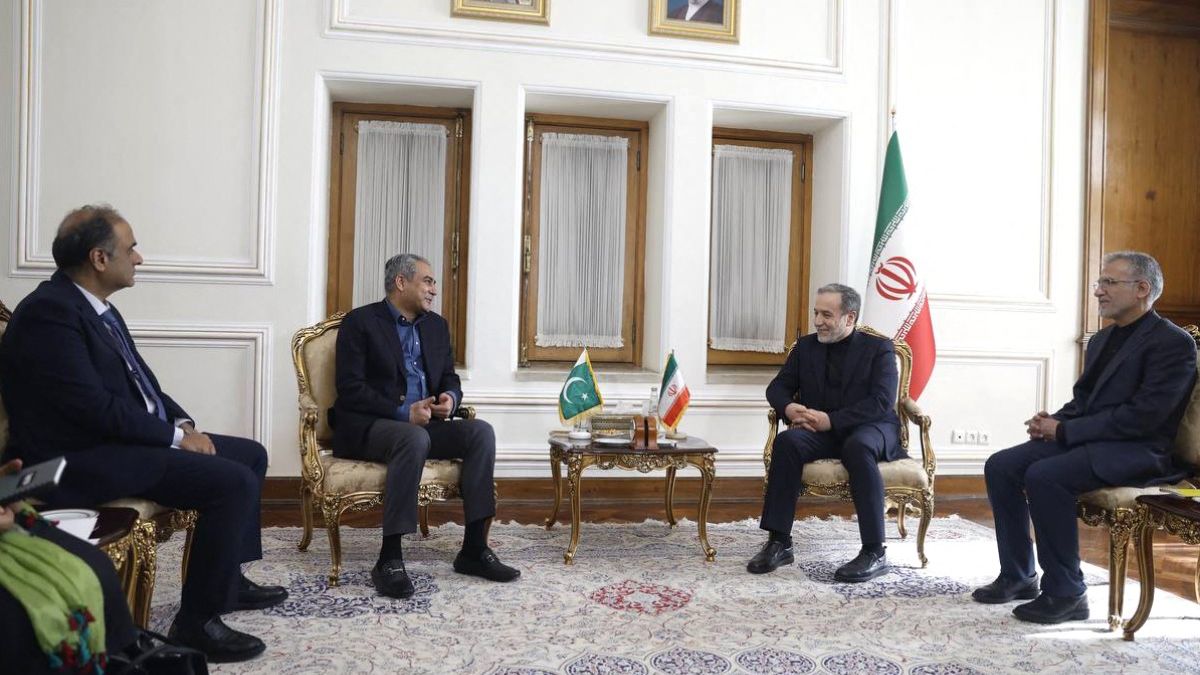
US Vice President JD Vance arrived in Switzerland to join the talks with an Iranian delegation led by Parliament Speaker Mohammad Bagher Ghalibaf and Foreign Minister Abbas Araghchi. Negotiations also involved mediators from Pakistan and Qatar.
Also Read: Ahead of the Signing of the US-Iran Agreement, Oil Prices and Middle East Stability are in the Spotlight
“I hope we can achieve progress on the nuclear issue and a ceasefire in Lebanon. Those two things are the main focus of the discussion,” Vance told reporters before his departure from the United States.
The understanding reached in early June aims to extend the ceasefire between Washington and Tehran after the war that broke out in February 2026.
Both parties also agreed to pave the way for the formation of a more comprehensive agreement within the next two months.
However, optimism regarding the diplomatic process is still overshadowed by the unstable security situation in Lebanon. Iran previously threatened to close the Strait of Hormuz again after accusing Israel of continuing to carry out attacks in southern Lebanon despite a ceasefire agreement.
Iran’s Supreme Leader’s military adviser, Mohsen Rezaei, reminded Tehran to remain careful in responding to the negotiation process.
“The enemy has shown himself as a party who often breaks promises. Therefore, every form of optimism must be responded to with vigilance,” he wrote via X’s social media.
Spokesperson for the Iranian Foreign Ministry, Esmaeil Baqaei, emphasized that his country’s delegation would demand the implementation of all previously agreed commitments.
According to him, failure to implement the agreement could threaten the continuity of the ongoing diplomatic process.
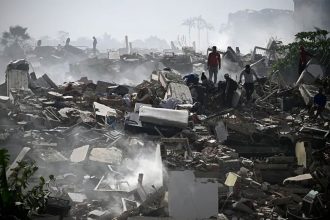
Meanwhile, tensions in Lebanon remain a major concern. On Saturday, June 20 2026, Israel and Hezbollah again accused each other of violating the ceasefire. The Israeli military reported one soldier was killed in fighting in southern Lebanon.
On the other hand, Hezbollah accused Israel of continuing to carry out military operations even though an agreement to stop fire had been announced. Lebanese state media reported dozens of locations were targeted by air strikes and at least 30 people were reported killed.
This ongoing conflict is considered to be able to hamper the diplomatic efforts being developed by the US and Iran. However, the two countries are continuing talks in the hope of reaching a more permanent agreement regarding regional security and Iran’s nuclear program.
The results of the meeting in Switzerland are expected to determine the direction of relations between the two countries in the coming months as well as influence the geopolitical stability of the Middle East as a whole.***