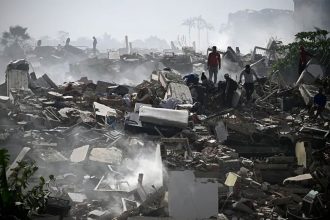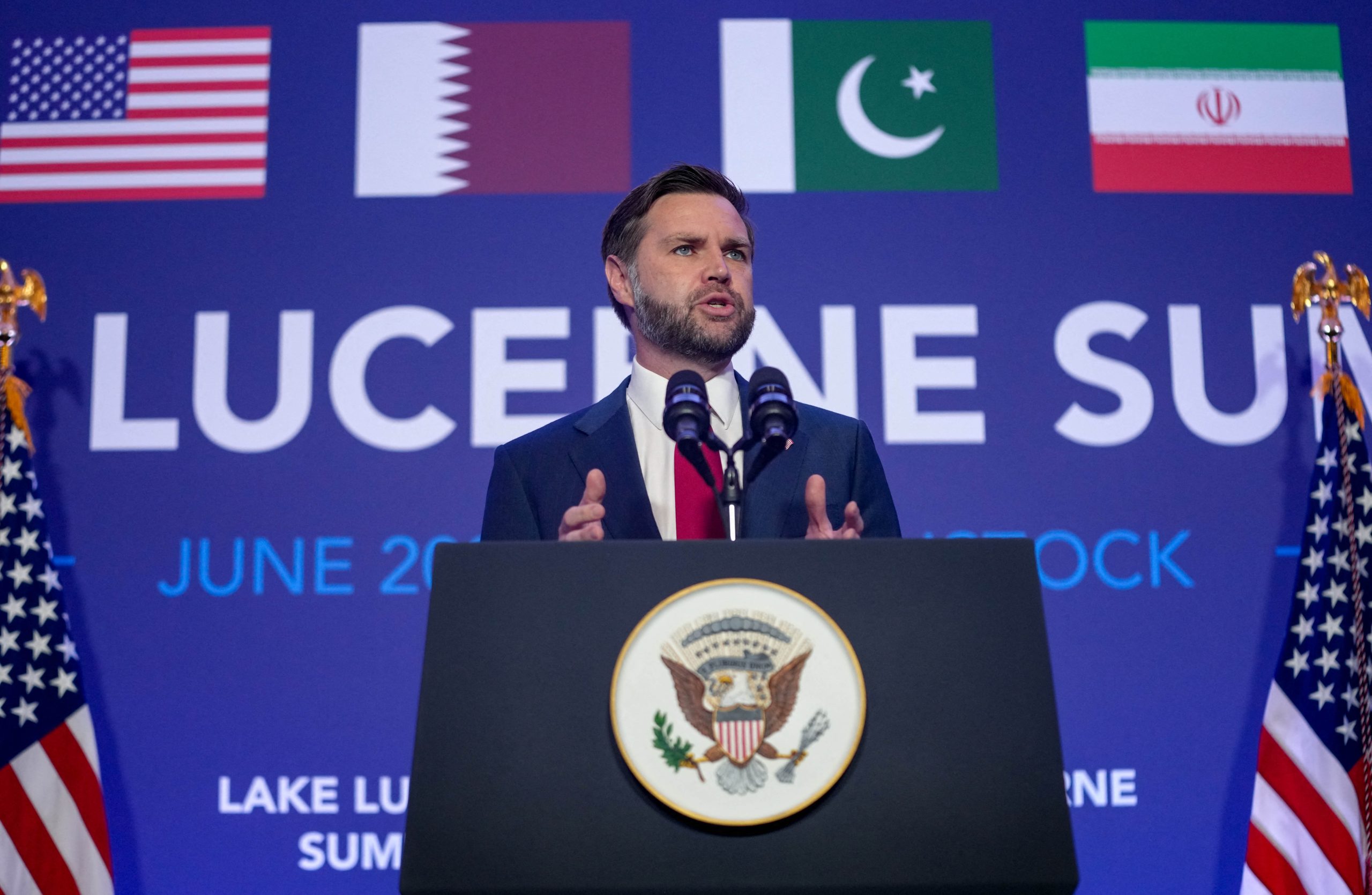
United States Vice President JD Vance stated that bilateral talks with Iranian representatives have laid a very strong foundation for a final agreement aimed at ending the conflict in the Middle East.
The high-level meeting, held at the Bürgenstock resort in Switzerland, marked a new phase in the long-strained diplomatic relationship between the two countries. This initial step is expected to pave the way for more stable regional peace.
“The final agreement is the house,” Vance told reporters on Monday, June 22, 2026, as quoted by The Guardian.
He added that the basic foundation had been successfully established, although the house itself had not yet been fully built. However, he expressed confidence that this strong foundation could lead to the best outcome for both the international community and domestic populations.
During the briefing, Vance signaled Washington’s willingness to release Iranian financial assets that have long been frozen. In return, the funds would be specifically allocated for the purchase of agricultural commodities from American farmers, including soybeans, corn, and wheat.
This humanitarian-commercial policy is designed to ensure that all use of the funds remains under strict oversight by both parties.
The United States government reaffirmed its commitment to closely monitor the disbursement process to prevent any misuse. Vance insisted that intensive monitoring mechanisms would be implemented alongside mediator countries to ensure that all funds are directed toward the welfare of the Iranian people.
He emphasized that every effort would be made to guarantee that the money does not flow toward financing terrorism or radical groups operating in conflict zones.
Lebanon Security Situation
Regarding the continuing tensions in Lebanon, Vance reported what he described as very positive developments emerging from the negotiating table.
Washington is pushing for a comprehensive regional ceasefire to halt hostilities between Hezbollah and the Israeli military. The United States also stressed the importance of preventing incidents on the ground from escalating into a much larger military confrontation.
To avoid military misunderstandings, both sides have agreed to establish a deconfliction mechanism that will serve as a direct communication channel.
The mechanism will allow parties involved in the conflict to communicate immediately whenever emergency situations arise along border areas.
Vance argued that such an emergency communication channel is crucial for preventing the outbreak of open warfare triggered by unilateral provocations on the ground.
He cited a classic example in which a soldier launches an unmanned aircraft without authorization from senior military command. While Israel has the right to respond to such actions, Vance said the response would be far more effective if handled within the framework of ongoing dialogue.
As a result, a communication mechanism involving Lebanon, Hezbollah, Israel, and other regional partners was officially activated on Monday afternoon.
Although he supports every nation’s right to self-defense, Vance emphasized the importance of a measured de-escalation process.
He claimed that conditions along the Lebanese border during the past 24 hours represented the most peaceful situation seen in recent times.
Nuclear Monitoring
On another front, nuclear monitoring remains one of the key issues under discussion.
Vance revealed that an emergency call had been placed to the International Atomic Energy Agency (IAEA) in the early hours of the morning to facilitate rapid coordination.
Although the initial communication did not receive an immediate response, technical discussions with IAEA inspectors are scheduled to take place later this week.***