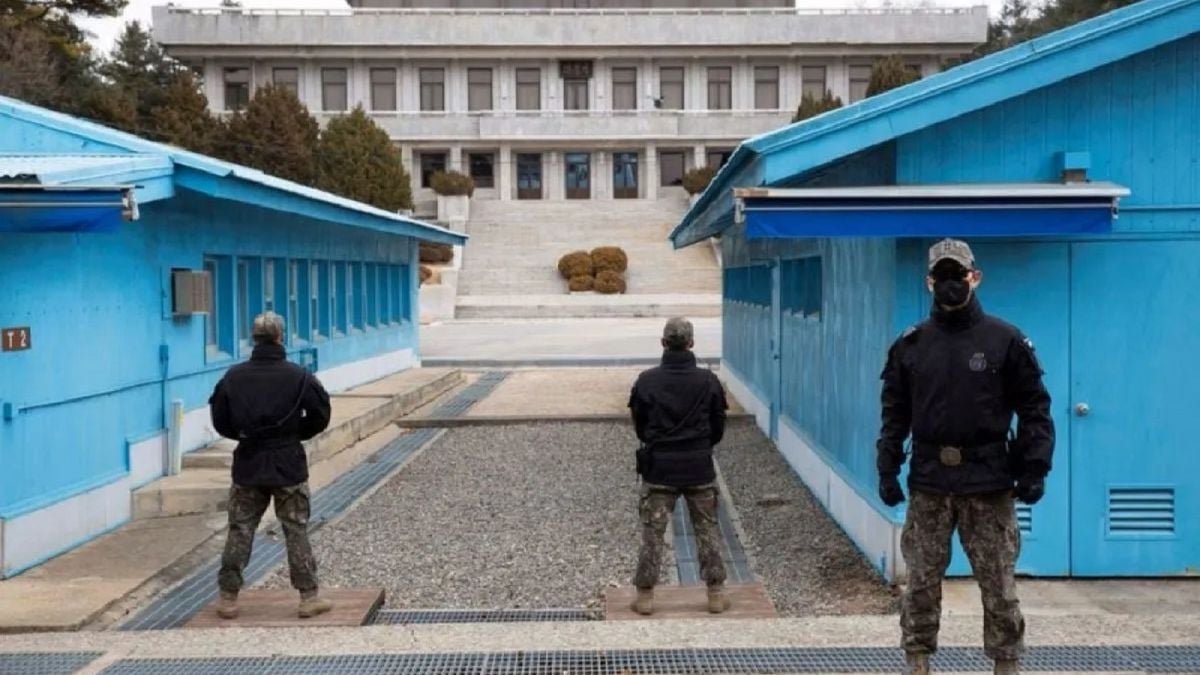
PAKU MEDIA, SEOUL – The South Korean government is preparing to make major changes in one of the most sensitive areas on the Korean Peninsula.
Starting in 2027, civilian access to areas near the North Korean border will be expanded through a policy of narrowing the Civilian Control Line (CCL).
This step is considered one of the most significant reforms in border area management since the end of the Korean War more than seven decades ago.
Prohibited Areas Will Be Opened Wider
The South Korean Ministry of Defense announced that the CCL limit would be narrowed from around 10 kilometers to approximately 6 kilometers from the border.
For decades, the area has been under strict military supervision because it is considered important for national security and defense operations.
As a result, residents who live or manage land in these areas must obtain special permits from military authorities to carry out various activities, including farming and building certain facilities.
South Korean Defense Minister, Ahn Gyu Back, said the new policy was designed taking into account changing societal needs and developing security dynamics.
“We have prepared a CCL adjustment plan that takes into account future security conditions and the reduced number of military personnel, without reducing operational readiness,” he said.
Also Read: Prosecutors Reveal Secret Plan of Ex-President of South Korea to Provoke North Korea
Farmers and Local Residents Are the Parties Who Benefit Most
This policy immediately received a positive response from people living in border areas.
So far, various restrictions in effect have meant that land development and economic activity has proceeded more slowly than in other areas.
With the reduction in areas included in the military control zone, development opportunities are expected to open up more.
The agricultural sector is one of the most profitable. Apart from that, the government also sees the potential to increase regional investment and develop tourist destinations, which have been difficult to realize due to various security restrictions.
Ganghwa County Council member Park Heung Yeol said residents have for years had to face additional procedures to use private land under military supervision.
The Legacy of War that Lasts Decades
The Civilian Control Line was a direct consequence of the end of the Korean War in 1953.
Even though the war has stopped, South Korea and North Korea are technically still at war because the conflict was only ended through a ceasefire agreement, not a permanent peace treaty.
Since then, the area around the border has been tightly guarded to protect military facilities and control the movement of civilians.
Currently, the CCL stretches up to around seven kilometers from the Military Demarcation Line in the western sector and reaches around 10 kilometers in the eastern sector.
For many local residents, these regulations have been a major obstacle in developing their businesses and utilizing the assets they own.
The government also makes it easier to use agricultural drones
Not only does it narrow the area of civilian supervision, the government also plans to simplify procedures for using drones for agricultural needs.
Yeoncheon Regional Head, Kim Deok Hyeon, assessed that this policy would help farmers increase productivity while reducing the administrative obstacles they have been facing.
This step is considered as part of efforts to modernize border area management without sacrificing national security aspects.
Also Read: Former South Korean Intelligence Chief Arrested, Allegedly Involved in Yoon Suk Yeol Era Military Emergency Efforts
Not Expected to Trigger a North Korean Reaction
A number of observers believe that this policy change is unlikely to trigger a significant response from Pyongyang.
The reason is that this policy only regulates areas that are completely on South Korea’s side and does not change military boundaries or border security status.
However, this decision is still seen as a signal that Seoul is starting to adopt a more flexible approach in managing an area that has been synonymous with strict restrictions for decades.
Part of Efforts to Defuse Tensions
This latest policy is also in line with steps previously taken by President Lee Jae Myung’s government to reduce tensions on the Korean Peninsula.
In 2025, the South Korean government stopped using loudspeakers at the border that had for years been used to broadcast K-pop music, news and various propaganda messages into North Korean territory.
Now, with plans to open wider access for civilians in border areas, the government seems to want to create a new balance between security interests and the development needs of society.
For residents who have lived under various restrictions for decades, this policy is not just an administrative change. This is a new opportunity to develop their area in one of the most sensitive and historic regions in East Asia.***